

A Viennese Tradition with Centuries of History
The history of Viennese coffee house culture reaches back to the late seventeenth century. Vienna’s first coffee house was established by Deodato. By 1720, the Kramer coffee house on the Graben was already providing newspapers for its guests. Over the following centuries, the coffee house developed into an important social and cultural meeting place in the city.
Since 2011, Viennese coffee house culture has been included in Austria’s national inventory of intangible cultural heritage. Marble topped tables, Thonet chairs, alcoves, newspaper tables and historic interior details are among its characteristic elements. Just as important, however, is the way these spaces are used. A Viennese coffee house is a place to read, talk, observe and take your time.
It is this combination of everyday life and culture that distinguishes the traditional Vienna coffee house from a place simply visited for a quick cup of coffee.
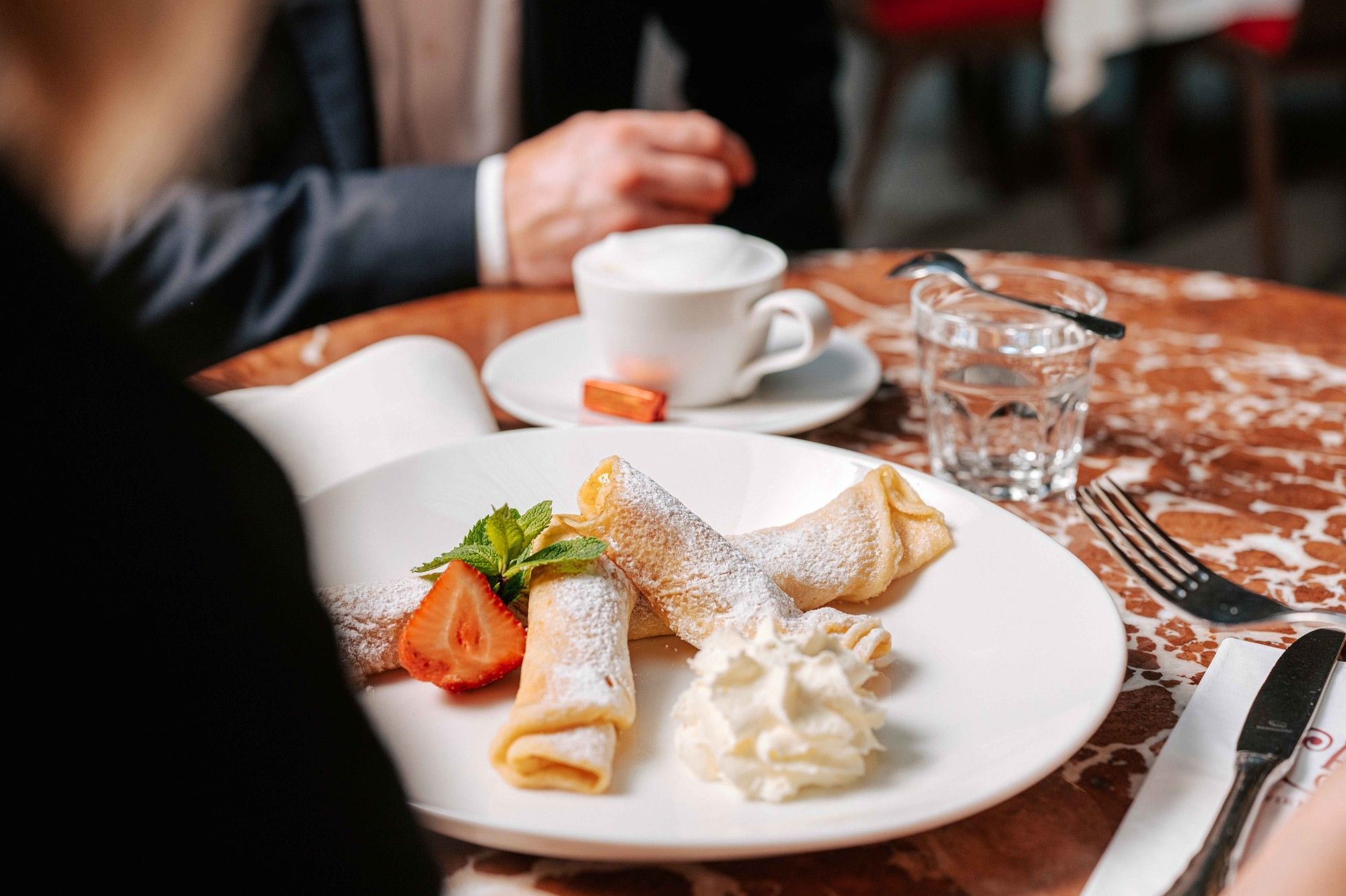
Demel: Viennese Confectionery Tradition Since 1786
Just a short walk from the Hofburg on Kohlmarkt is Demel. Its story began in 1786, when Ludwig Dehne opened his confectionery on Michaelerplatz. Christoph Demel took over the business in 1857 and in 1888 it moved to its present location on Kohlmarkt.
Demel combines Viennese coffee house culture with the tradition of the former imperial confectionery. Its historic interior and elaborate window displays are as much a part of the experience as its cakes, pastries and Austrian classics.
Visitors exploring coffee culture in Vienna can discover its sweeter side here. At the same time, Demel provides a glimpse into the Habsburg era and the close connections between food, craftsmanship and the history of Vienna.
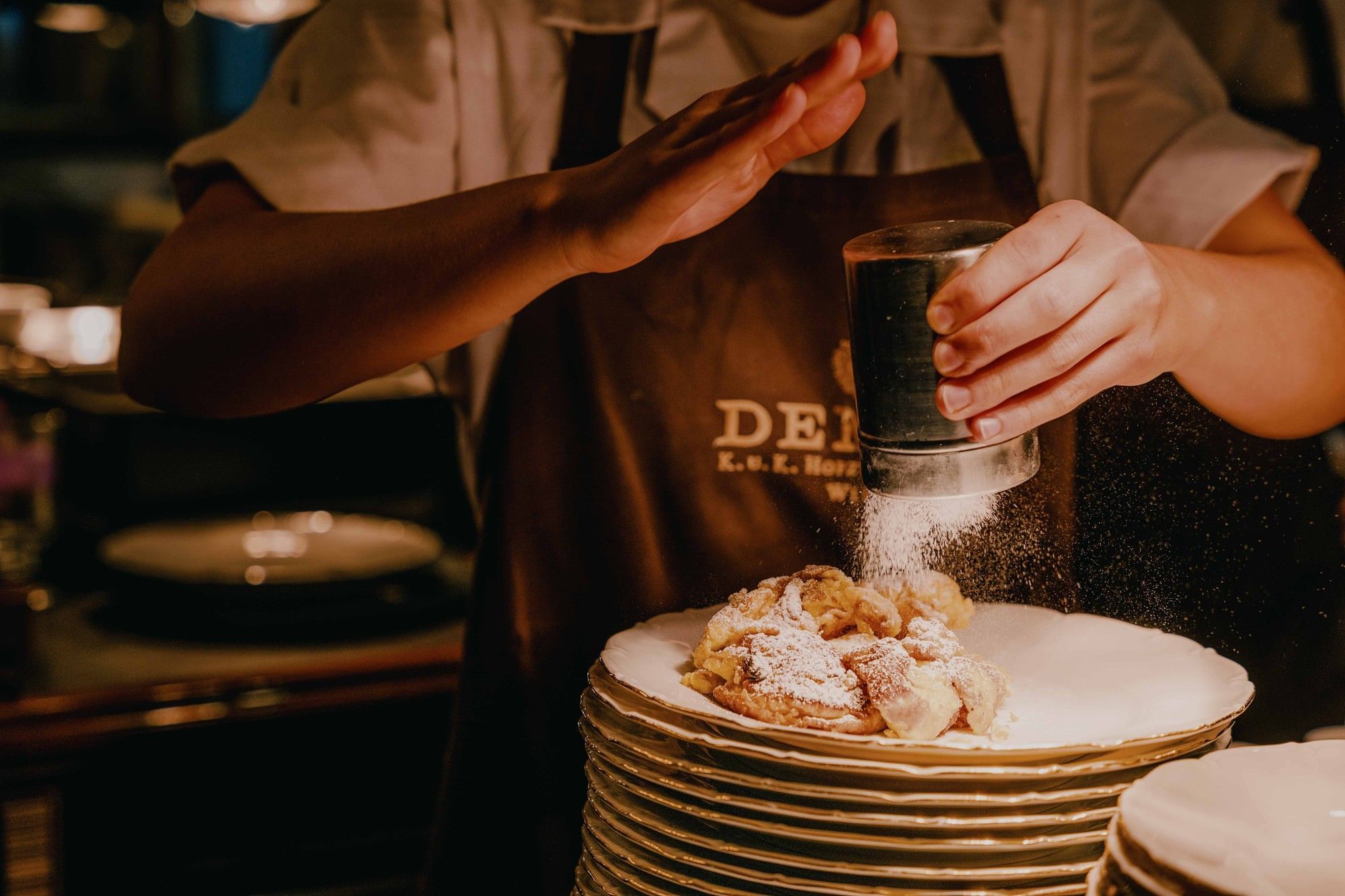
Café Sperl: A Coffee House from Another Era
Café Sperl was built in 1880 and developed into a meeting place for artists, musicians and other figures from Viennese society. From 1895, the so called Haagengesellschaft met here, a circle from which the Vienna Secession would later emerge.
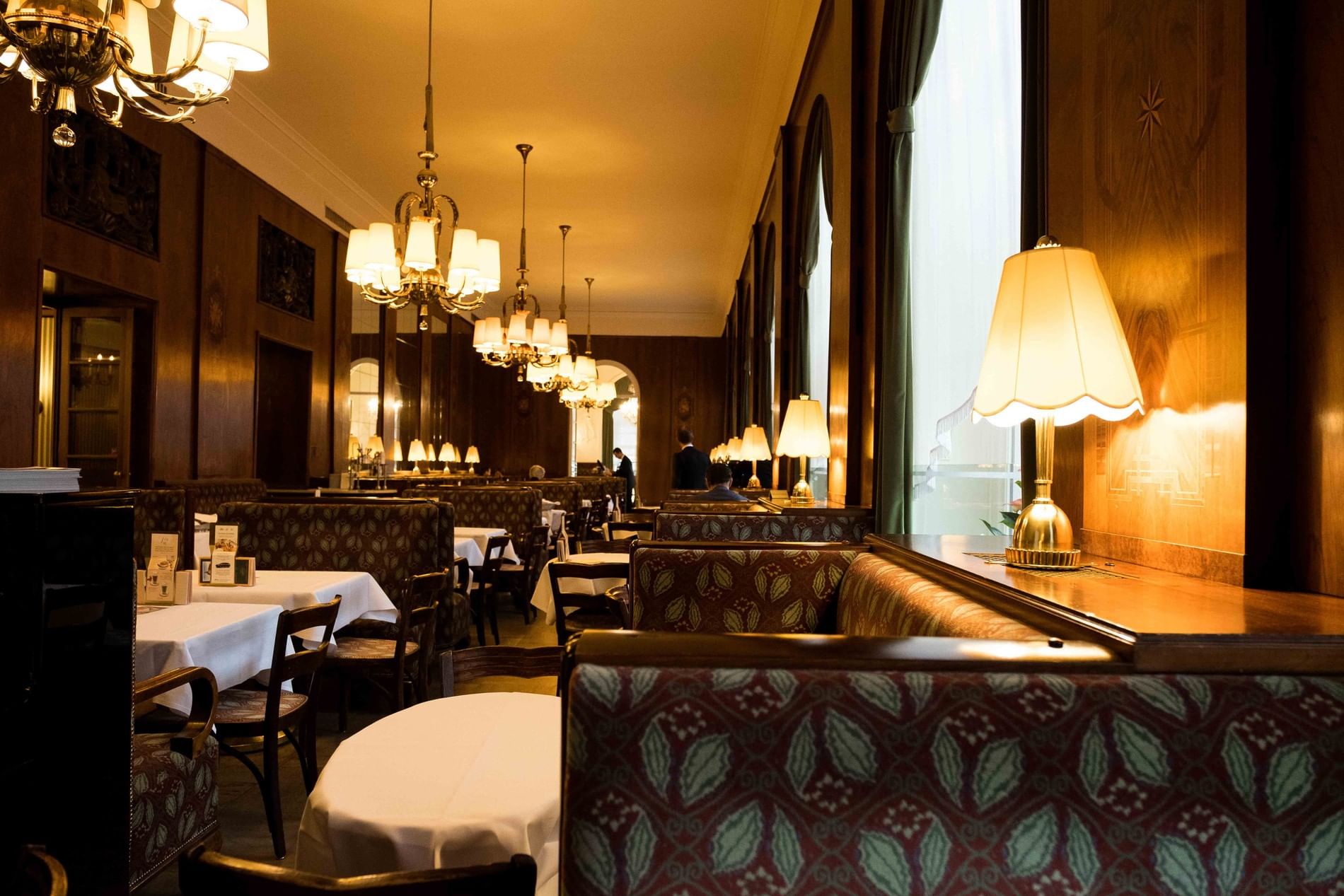
Classic coffee house tables, historic furnishings and billiard tables continue to shape its atmosphere today. Café Sperl therefore provides a particularly good example of why the traditional coffee house in Vienna has always been more than simply a place serving food and drinks.
Coffee, a newspaper or a traditional pastry are all part of the experience, as is simply taking the time to stay. Visitors looking for a classic Viennese coffee house will find an atmosphere at Café Sperl in which much of the traditional character has been preserved.
Café Landtmann: Coffee House Culture on Vienna’s Ringstrasse
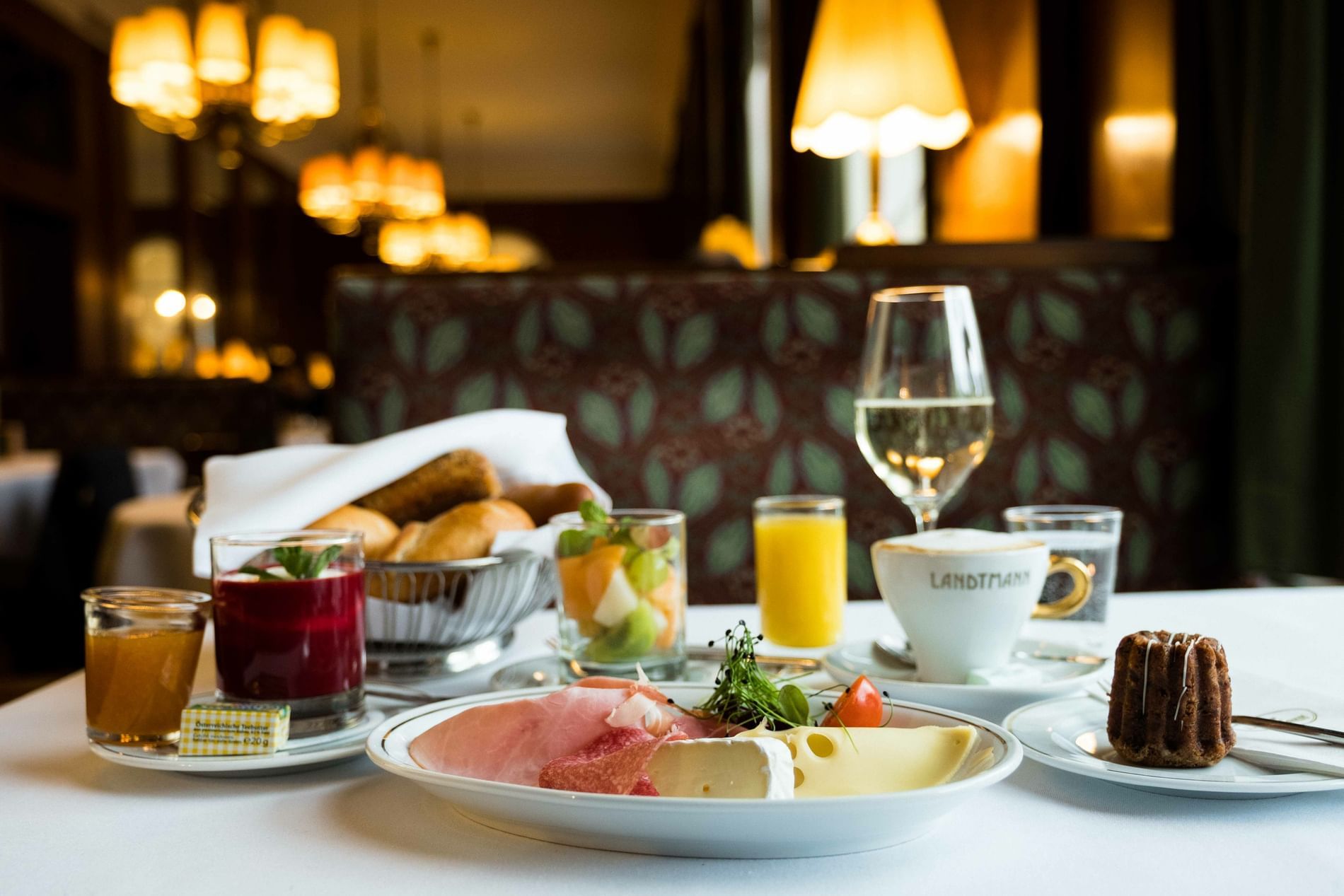
Franz Landtmann opened Café Landtmann in 1873. At the time, Vienna City Hall, the university and parts of the surrounding Ringstrasse were still under construction. The coffee house later became a meeting place for personalities from culture, politics and society.
Much of its preserved and protected interior dates from a major redesign in 1929. Historic woodwork, alcoves and traditional coffee house furnishings continue to define its appearance.
At the same time, Café Landtmann demonstrates that Viennese coffee house culture is not simply a memory of the past. Live music and changing musical performances currently take place every Wednesday evening, continuing the coffee house tradition as a setting for both culture and social life.
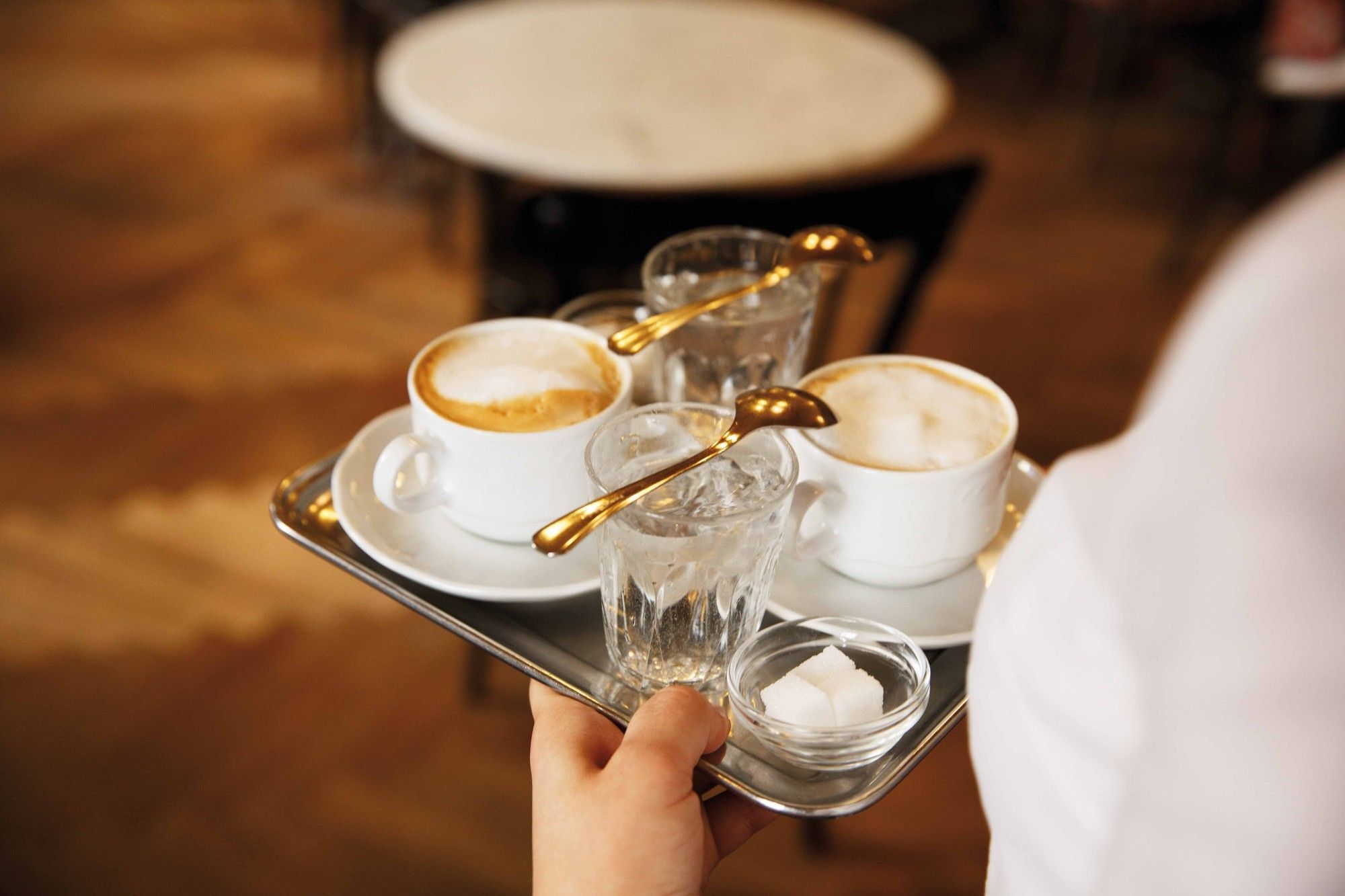
What Do You Order in a Viennese Coffee House?
Anyone visiting a coffee house in Vienna for the first time will quickly discover that the coffee menu has a vocabulary of its own. Rather than simply ordering coffee, names such as Melange, Kleiner Brauner and Grosser Brauner are part of everyday Viennese coffee house life.
Traditional pastries are equally important to Vienna coffee culture. Apple strudel, Guglhupf and a wide variety of cakes can be found in many historic cafés, turning a coffee house visit into a culinary experience as well.
There is also little reason to hurry. Sitting for longer, reading and watching the world go by are part of the tradition that has shaped Vienna’s coffee houses for generations.
Viennese Coffee House Culture Around Hotel THE LEO GRAND
Located in the historic city centre, Hotel THE LEO GRAND is an ideal starting point for discovering Viennese coffee house culture. Short walks from the hotel lead through the first district to traditional coffee houses, historic streets and places where Viennese culture has developed over centuries.
Nearby St Stephen’s Square, the Graben, Kohlmarkt and the area surrounding the Hofburg can easily be combined with a visit to a coffee house. Searching for remarkable cafés in Vienna therefore becomes a walk through the history of the city itself.
After a day exploring Vienna, the route leads back to Hotel THE LEO GRAND in the heart of the city. A stay here can naturally combine culture, enjoyment and time to linger, the same qualities that continue to define Viennese coffee house culture.